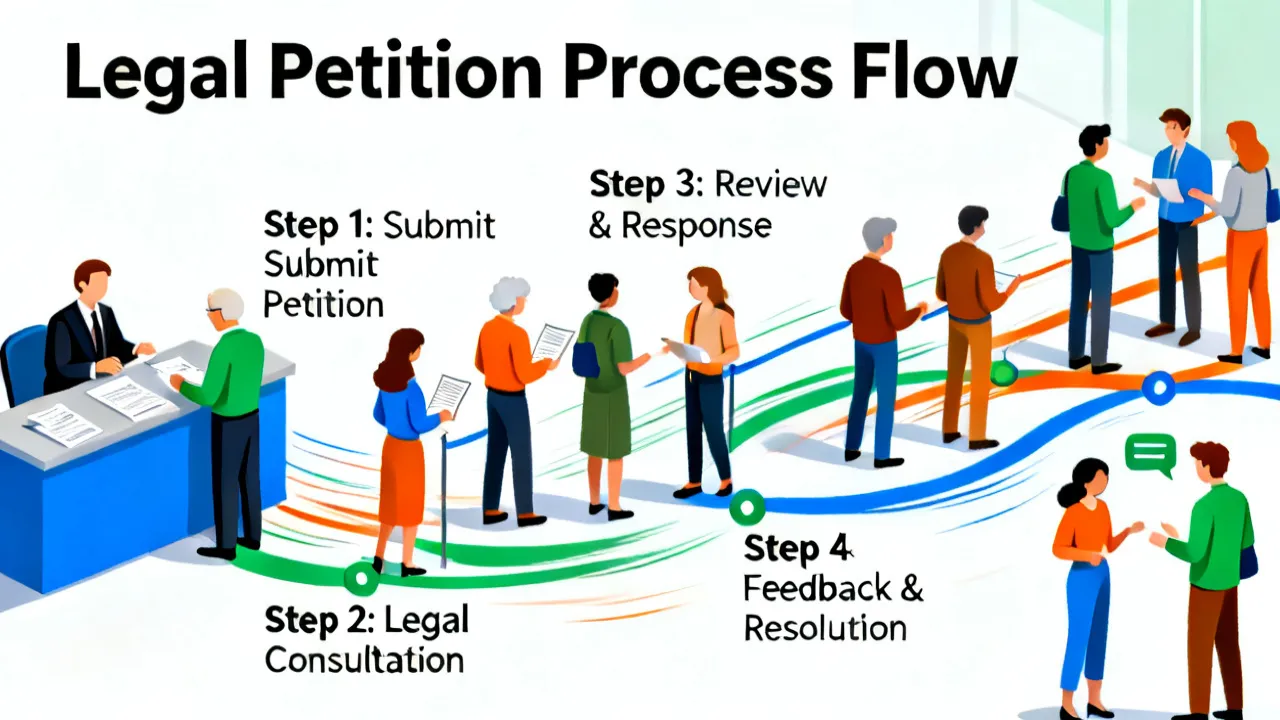
Understanding the Role of Petitions
This article delves into the intricate world of petitions, exploring their evolution, significance, and application throughout history. Petitions serve as a formal request to authorities, playing a crucial role in democratic societies by enabling citizens to voice concerns and influence decision-making. Effective petitions rely on clear communication, imbued with pertinent facts, making them an essential tool for advocacy and civic engagement.

The Historical Significance of Petitions
Throughout history, petitions have served as a powerful conduit for citizens to communicate with governments and other authoritative bodies. Dating back to early civilizations, petitions were tools for collective requests, often used to address grievances and propose changes. This time-honored practice evolved to become a cornerstone of democratic expression, providing a formal avenue for individuals and groups to express opinions and seek redress from those in power.
The earliest recorded petitions trace their roots to the ancient world, where they were used by citizens to address monarchs or governing bodies. The Babylonian King Hammurabi, who ruled around 1754 BC, is famously known for establishing a code of laws that included provisions for the public to appeal decisions made by authorities. Similarly, in Ancient Rome, the Plebeians utilized petitions to demand rights from the Patricians, leading to significant political reforms. Thus, petitions have historically functioned as mechanisms of change, echoing the voices of the common people in the corridors of power.
As societies evolved, so too did the use of petitions. During the Middle Ages, petitions began to take on more structured forms, often addressing feudal lords regarding issues such as taxation, land disputes, and judicial matters. These documents were typically written in Latin and required specific formats and language, which limited their accessibility to the educated elite. However, as literacy rates increased with the advent of the Renaissance and the Reformation, petitions became more democratized, enabling broader participation in the political process.
The English Civil War in the 17th century marked a significant turning point in the use of petitions, as ordinary citizens began to organize and present them en masse to Parliament. This trend continued into the 19th century, with the Chartist movement in the UK advocating for political rights through petitions that sought to expand suffrage to all men. The Chartist petitions were monumental in gathering over a million signatures, although they were ultimately ignored by Parliament. Nonetheless, the momentum generated by this movement laid the groundwork for future democratic reforms.
In the United States, petitions played a crucial role in the fight for independence and the establishment of democracy. The Declaration of Independence itself can be seen as a form of petition, expressing the colonies’ grievances against British rule and their desire for self-determination. After independence, the early American republic saw a surge in petitions as citizens aimed to address various social, economic, and political issues, from abolition to women's suffrage. This historical background emphasizes the enduring significance of petitions as instruments of advocacy and change.
The Anatomy of a Modern Petition
Today, a petition is composed of several key elements designed to effectively convey a message and compel action. The headline must be engaging, capturing the essence of the issue at hand. This is followed by a detailed statement of the grievance or proposal, including evidence and reasoning to support the arguments. Signature sections allow for the collection of endorsements, which help demonstrate widespread support. A successful petition not only outlines the issue but also proposes a feasible solution, reflecting a well-rounded understanding of the problem.
One critical aspect of modern petitions is their ability to outline not just the issues at stake but also the potential consequences of inaction. By painting a vivid picture of the challenges faced and the benefits of addressing them, petition authors can motivate readers to participate actively in the cause. This storytelling approach humanizes the issues, making them relatable and urgent, encouraging more individuals to lend their signatures and voices to the cause.
The structure of a modern petition also incorporates calls to action that inform signers what they can do next. For instance, after signing the petition, individuals might be encouraged to share it on social media, recruit friends and family to support the cause, or write directly to their local representatives. This multi-faceted approach not only broadens the petition's reach but also fosters a sense of community among supporters, uniting them in a shared goal.
The Role of Petitions in Law and Policy-Making
Petitions remain pivotal in shaping laws and policies. They often catalyze discussions and prompt legislative reviews when a significant number of signatures or endorsements are gathered. By reflecting public sentiment, they provide lawmakers with insights into pressing issues, which can influence priorities and legislative agendas. In certain jurisdictions, the threshold for triggering governmental deliberation is defined by a specific number of signatures, underscoring the petition's power as a democratic instrument.
For instance, in the United States, the We the People platform allows citizens to create petitions that, if they receive enough signatures (usually 100,000 within a specified time frame), require a formal response from the White House. This initiative not only empowers citizens but also promotes transparency and accountability within the government, demonstrating how petitions can intersect meaningfully with the policymaking process.
Internationally, petitions have also played a significant role in shaping policy changes. In the European Union, citizens have the right to engage in the European Citizens’ Initiative, which allows them to propose legislation that directly affects EU policy, provided they gather a minimum number of signatures from member states. This process illustrates the global reach of petitions as instruments of change within political structures.
Case Studies: Petitions in Action
Numerous successful campaigns highlight the efficacy of petitions in driving change. For instance, petitions addressing environmental concerns, such as the preservation of natural habitats, have led to pivotal policy shifts and the enactment of protective legislation. A prime example is the petition created to save the Arctic National Wildlife Refuge, which garnered thousands of signatures and successfully pushed Congress to consider environmental protections for the region.
Similarly, petitions advocating for social justice and human rights have heightened awareness and driven reforms, demonstrating the broad spectrum of issues petitions can address. The movement for racial equality in the United States saw many significant petitions, one such being a petition to end police brutality, which attracted extensive media coverage and led to nationwide protests for reform.
One particularly compelling case is the petition to ban the use of plastic straws in various cities in the United States. Initiated by environmental activists, it highlighted the detrimental effects of plastic pollution on marine life. As public support surged, cities like San Francisco and Seattle took decisive action, leading to a broader movement toward reducing single-use plastics and encouraging responsible consumer behavior.
Another notable example is the petition for the right to vote for women, which gained traction in the 19th and early 20th centuries. This grassroots movement utilized petitions to draw attention to the need for suffrage, illustrating how organized efforts can push social boundaries. Organizations like the National American Woman Suffrage Association (NAWSA) actively collected signatures and presented petitions to Congress, culminating in the ratification of the 19th Amendment in 1920, which granted women in the United States the right to vote.
Creating an Impactful Petition: A Step-by-Step Guide
| Step | Description |
|---|---|
| 1. Identify the Issue | Research and clearly define the issue you wish to address. Understand its nuances, underlying causes, and the stakeholders involved. |
| 2. Define the Objective | Determine the specific change or action you seek from the targeted authority. Ensure the objective is clear, measurable, and attainable. |
| 3. Gather Evidence | Compile relevant facts, statistics, expert testimonies, and personal stories to support your case. Diversifying your evidence will strengthen the argument. |
| 4. Craft the Petition | Write a compelling headline and a well-structured narrative explaining your cause. The language should be persuasive yet concise, capturing attention quickly. |
| 5. Mobilize Support | Engage with communities and individuals to gather signatures and endorsements. Utilize social media, local events, and community gatherings to promote your petition and generate enthusiasm. |
| 6. Submit and Follow-Up | Send the petition to the designated authority and request feedback or updates. Follow up regularly to maintain momentum and engage your supporters. |
Petitions in the Digital Era
The digital revolution has transformed the landscape of petitions, making it easier than ever for individuals to initiate and support causes. Online platforms host and disseminate petitions to global audiences, vastly increasing their reach and impact. Websites like Change.org and Avaaz allow users to create petitions with just a few clicks, bypassing traditional barriers to entry and enabling anyone with internet access to make their voice heard.
Digital petitions are equipped with sophisticated tools for tracking progress and analyzing data, providing valuable insights on demographics and supporter engagement. These platforms often include features for sharing petitions across social media, which amplifies visibility exponentially. The virality of online petitions can turn localized issues into global movements overnight, showcasing the potential of digital advocacy to drive change on an unprecedented scale.
Moreover, the digital age has introduced innovative strategies for mobilization. Campaign creators can now utilize video storytelling to convey their message more powerfully, presenting emotional appeals that resonate deeply with potential signers. Fundraising tools integrated within petitions enable campaigns to gather resources for additional outreach and advocacy efforts, further enhancing their chances of success.
However, while the digital era presents remarkable opportunities, it also introduces challenges. The sheer volume of online petitions can lead to fatigue among potential supporters, with many individuals becoming desensitized to the flood of causes vying for attention. Moreover, the anonymity and ease of online engagement can sometimes result in a lack of commitment, where individuals may sign a petition without taking further action to support it.
Challenges and Criticisms
Despite their effectiveness, petitions face several challenges. Skeptics question their actual influence on policy decisions, noting that not all petitions result in tangible outcomes. The perceived disconnect between public opinion and legislative action can lead to disenchantment among advocates who pour time and resources into their causes, only to find that their efforts do not yield the desired results. Furthermore, the ease of creating online petitions can sometimes lead to saturation, with numerous competing causes vying for attention, making it arduous for any single issue to stand out.
Another criticism relates to the effectiveness of online petitions compared to traditional ones. Critics argue that digital platforms can create an illusion of participation without fostering the deeper civic engagement that often accompanies grassroots campaigns. Traditional petitions, often part of organized movements, can galvanize communities in a way that simple online signatures may not. Nonetheless, proponents of online petitions argue that they serve to introduce critical issues to broader audiences, often serving as the first step in a larger advocacy strategy.
Nevertheless, many argue that the process itself is valuable, as it facilitates discourse and civic involvement. Petitions can serve as educational tools, informing both signers and non-signers about pressing social issues. The conversations sparked by these petitions can alter perceptions and compel individuals to engage more actively in democratic processes. Thus, while challenges exist, the fundamental role of petitions in promoting civic engagement and advocacy remains significant.
FAQs
- What is a petition?
A petition is a formal request to an authority, typically aiming to garner support for a cause or protest an issue. It serves as a mechanism for individuals and groups to collectively voice their concerns and seek action.
- How do petitions influence policy?
By gathering significant public support, petitions can pressure policymakers to debate and potentially act on the issues raised. They serve as indicators of public sentiment, providing lawmakers with insights that can influence legislative agendas and priorities.
- Can anyone start a petition?
Yes, petitions can be initiated by any individual or group with a vested interest in a particular cause. The democratization of the petition process through online platforms has made it accessible to a broader audience than ever before.
- Are online petitions as effective as traditional ones?
Online petitions offer broader reach and flexibility, potentially increasing their effectiveness in mobilizing support. While traditional petitions are often more organized, online petitions can achieve rapid traction and reach audiences far beyond local communities.
- What makes a petition successful?
A successful petition typically combines a clear and compelling call to action, strong evidence supporting the cause, effective outreach strategies, and a significant level of public engagement. Additionally, compelling storytelling can resonate with potential signers, drawing them to the cause.
- How can I make my petition stand out?
To make your petition stand out, focus on the uniqueness of your cause and create a strong narrative that connects with people's emotions. Utilize striking visuals, leverage social media for promotion, and build a community around your petition to attract attention and support.
The petition remains a vital tool for advocacy, continuously evolving to meet the demands of modern democracy. As societal challenges grow more complex, the need for informed, strategic petitions becomes ever more pressing. By understanding the mechanisms and potential impact of petitions, individuals can more effectively engage in civic discourse and promote meaningful change.
As we move forward, the role of petitions in society will likely adapt to accommodate emerging technological tools and changing political landscapes. We may witness the rise of new forms of petitions that incorporate multimedia elements or blockchain technology for secure signature verification. Regardless of how they evolve, the core purpose of petitions—to amplify the voices of the people and hold those in power accountable—will remain timeless.
Ultimately, as individuals continue to navigate the challenges and complexities of advocacy in a rapidly changing world, petitions will serve as a beacon of hope and a testament to the enduring power of collective action. By harnessing the collective will and passion of the public, petitions can spark significant changes, ensuring a more engaged and responsive democratic process for future generations.
-
1

Maximizing Benefits of Solar Panels: Costs and Energy Efficiency
-
2
Maximizing Your Purchase: Ram 1500 Deals and Towing Capacity
-
3
Affordable Stair Lifts for Seniors: A Comprehensive Guide
-
4
The Ultimate Guide to Lab-Grown Diamonds: Ethical & Cost-Effective Choices
-
5
The Ultimate Guide to Weight Loss Injections, Metabolism, and Appetite Suppression