Understanding 6Ms in Ishikawa Methodology
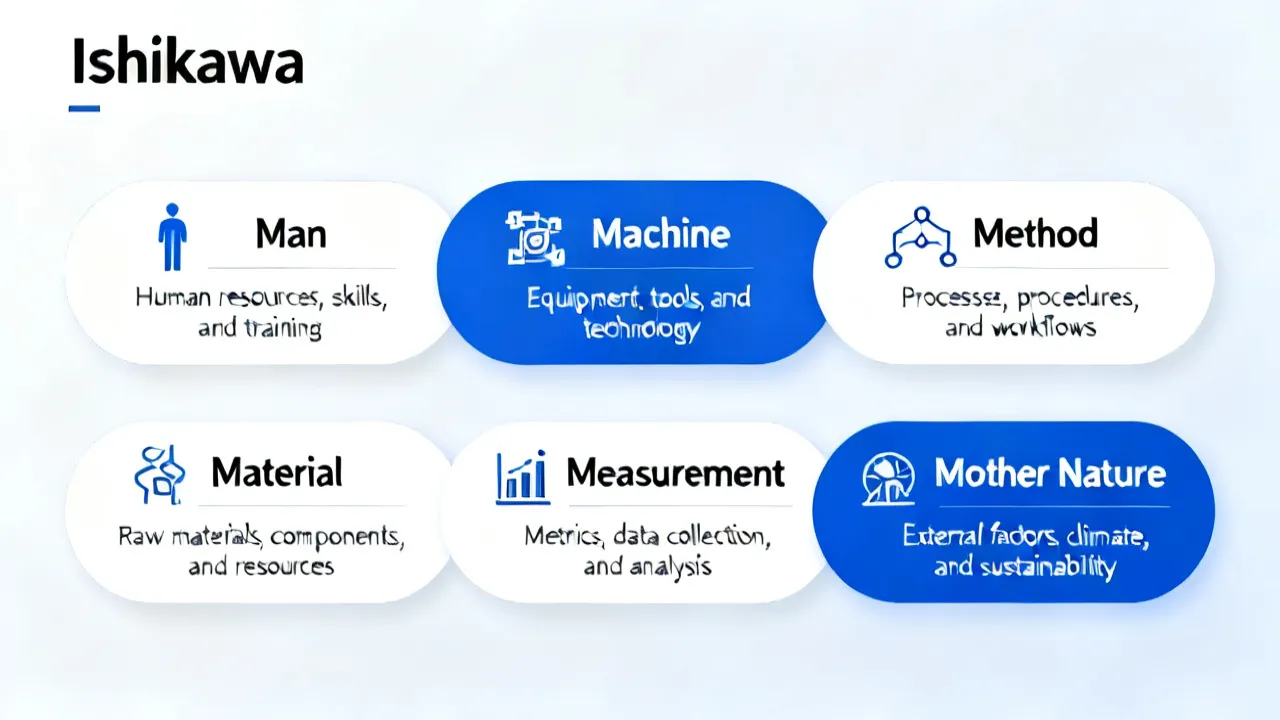
This article explores the application of the 6Ms in Ishikawa's fishbone diagram, a pivotal tool in quality control and process improvement. Developed by Kaoru Ishikawa, the methodology uses six categories — Man, Machine, Material, Method, Measurement, and Mother Nature — to help identify and analyze causes of defects or variations in production and service processes.
Introduction to Ishikawa's 6Ms
Ishikawa's fishbone diagram, also known as the cause-and-effect diagram, is a crucial tool in identifying problems within business processes. Developed by the Japanese quality control pioneer Kaoru Ishikawa, the fishbone diagram uses the 6Ms framework to systematically explore potential factors causing variability in production or service outcomes. These six categories are Man, Machine, Material, Method, Measurement, and Mother Nature, and each plays a vital role in maintaining the high quality and efficiency of operations. Understanding the 6Ms is not just about identifying problems, but also about recognizing the interdependencies of these factors and how addressing one area may impact the others.
The Significance of the 6Ms
The 6Ms framework is pivotal because it offers a comprehensive approach for analyzing processes. By segregating potential causes into distinct categories, businesses can focus their problem-solving efforts methodically and efficiently. This structured approach is particularly beneficial in industrial settings, where issues often stem from complex, interconnected systems. The significance of the 6Ms extends beyond mere identification of problems; it fosters a culture of continuous improvement, encourages teamwork and collaboration among departments, and aligns organizational goals with operational realities. In an environment where every process contributes to customer satisfaction, a deep understanding of each element of the 6Ms can lead to remarkable improvements across the board.
Exploring Each of the 6Ms
Man: This category encompasses human factors such as employee skill levels, work habits, and morale. Human errors or variations in performance can significantly impact productivity and quality. Addressing training, motivation, and workplace culture can alleviate associated problems. For example, regular training sessions can ensure that employees are equipped with the latest skills and knowledge, which is essential in rapidly evolving industries. Furthermore, fostering a positive workplace culture encourages employees to take ownership of their roles, often leading to innovative solutions and enhanced problem-solving capabilities. By investing in human capital, organizations can effectively minimize errors and boost productivity.
Machine: Involving equipment and technology used in operations, this category highlights issues related to machinery efficiency, maintenance schedules, and technological updates. Regular inspections and maintenance are crucial to minimizing downtime and defects. Strategic equipment placement, the adoption of predictive maintenance technologies, and ensuring that machines are operated within their design specifications can significantly influence overall productivity. For instance, implementing Internet of Things (IoT) solutions can provide real-time data on machinery health, allowing for timely interventions and reduced unplanned downtimes. Furthermore, organizations must keep abreast of technological innovations that can boost machine efficiency, ensuring they are not lagging behind competitors.
Material: This refers to the quality and availability of raw materials used in manufacturing. Variations in material quality can lead to inconsistent product standards. Ensuring reliable suppliers and stringent material quality checks can mitigate these risks. It’s not only about the quality of materials but also about the logistics of receiving them. Delays in supply chains can impact production schedules significantly. Therefore, establishing strong relationships with suppliers, implementing Just-In-Time (JIT) inventory systems, and utilizing advanced inventory management software can enhance material reliability while optimizing costs. Moreover, understanding the lifecycle and sustainability of materials used is becoming increasingly crucial in today's environmentally conscious market.
Method: Focusing on the processes and workflows adopted, including standard operating procedures and process consistency. Continuous review and optimization of methods can lead to significant improvements in efficiency and quality. Employing techniques like process mapping can help identify unnecessary steps or bottlenecks in existing workflows. Moreover, encouraging employee feedback on processes can unearth valuable insights into areas needing enhancement. The rise of agile methodologies in various industries has also emphasized the importance of adaptability in methods, allowing businesses to pivot and adjust as market needs change.
Measurement: The systems used for data collection and analysis within a process fall under this category. Precise measurement tools are essential for accurate quality assurance, and discrepancies in measurements can skew results and lead to incorrect conclusions. Investing in robust measurement technologies and data analytics can transform raw data into actionable insights. Additionally, using a balanced scorecard approach can help organizations maintain focus on key performance indicators (KPIs), facilitating a fine-tuned understanding of operational effectiveness. Training employees on the importance of data accuracy and relevance can also enhance the effectiveness of measurement initiatives.
Mother Nature: Referring to environmental and external factors, this includes issues like weather conditions, natural disasters, and regulatory changes that can affect production. While not always controllable, contingency planning can help reduce adverse impacts. For instance, developing risk management protocols and response strategies can ensure business continuity in the face of unforeseen disruptions. On a broader scale, understanding regulatory environments is crucial for compliance and can prevent costly penalties. Organizations today must also consider the broader impacts of climate change and adapt their strategies proactively to mitigate these risks, making sustainability a core aspect of their operational framework.
Applying the 6Ms: A Step-by-Step Guide
| Step | Action |
|---|---|
| 1 | Identify the problem you wish to address. Define it clearly to ensure everyone involved understands the issue. |
| 2 | Draw the fishbone diagram with the main problem at the head. This visual representation helps to clarify the focus area. |
| 3 | Draw lines branching from the central line, each representing one of the 6Ms. This categorization sets the stage for thorough exploration. |
| 4 | Brainstorm and list factors under each category suspected to cause the problem. Encourage wide participation to capture diverse insights. |
| 5 | Analyze possible root causes and identify key areas for further investigation or improvement. Utilize techniques such as the 5 Whys to drill deeper. |
| 6 | Develop and implement a plan to address identified causes and monitor results. Capture lessons learned and determine next steps for ongoing improvement. |
Integration with Modern Quality Control Techniques
Although the 6Ms in Ishikawa's fishbone diagram are rooted in traditional quality control practices, they remain highly relevant in contemporary process improvement strategies. Businesses often integrate this framework with other methodologies such as Six Sigma and Lean to achieve synergistic benefits. Utilizing advanced data analysis tools can enhance the identification of relationships between cause and effect, leading to faster and more effective problem resolution. For example, the incorporation of statistical process control (SPC) techniques allows for real-time assessment and adjustment of processes based on actual performance data, ensuring that variations are promptly addressed.
Additionally, combining Lean principles with the 6Ms can lead to the elimination of waste, ensuring that resources are used effectively. Lean methodologies emphasize the importance of value stream mapping and continuous flow, which can be effectively layered onto the foundational analysis provided by the 6Ms framework. In an environment where competition is fierce, leveraging these integrated methodologies not only promotes efficiency but also drives innovation through collaboration and teamwork.
Real-World Applications of the 6Ms
The application of the 6Ms extends across various industries, illustrating its versatility in addressing unique challenges. In manufacturing, for instance, an automotive company may utilize the 6Ms to improve production efficiency and reduce defects. Identifying human errors in assembly lines (Man), ensuring regular maintenance of machinery (Machine), sourcing high-quality parts (Material), refining assembly processes (Method), accurately measuring output (Measurement), and analyzing external factors such as supply chain disruptions (Mother Nature) can create a systemic approach to operational excellence.
In healthcare, the application of the 6Ms is vital for patient safety and quality of care. Healthcare providers may analyze the skills of their staff (Man), utilize state-of-the-art medical equipment (Machine), ensure medication and supplies meet regulatory standards (Material), adhere to best practice protocols (Method), monitor clinical outcomes through data (Measurement), and be prepared for external factors like pandemics that could impact patient care (Mother Nature). This comprehensive analysis fosters a culture of safety and continuous improvement, ultimately leading to better patient outcomes.
The service sector also benefits significantly from the 6Ms methodology. For instance, a restaurant might explore staff training programs (Man), kitchen equipment efficiency (Machine), sourcing ingredients from reliable suppliers (Material), optimizing their food preparation processes (Method), collecting customer feedback for service quality insights (Measurement), and adapting to local regulations affecting their business (Mother Nature). By leveraging the comprehensive nature of the 6Ms, service-oriented businesses can enhance customer satisfaction and build loyalty.
FAQs
- What industries benefit from using the 6Ms?
Industries such as manufacturing, healthcare, and service sectors greatly benefit from applying the 6Ms as they often face complex logistical and production challenges. Moreover, sectors like pharmaceuticals, logistics, and education have seen substantial improvements in operational efficiency through the implementation of the 6Ms framework. - Can small businesses use the 6Ms framework?
Yes, the 6Ms are versatile and can be scaled to suit businesses of any size, providing meaningful insights no matter the organizational complexity or resource availability. Small businesses can implement simplified versions of the framework to identify key issues without overwhelming their resources. - Are there limitations to the 6Ms approach?
While highly effective, the 6Ms may require adaptation when dealing with highly dynamic environments or non-repetitive processes, where new factors constantly emerge. For instance, rapid technological advancements or sudden market shifts may demand real-time adjustments that traditional applications of the 6Ms might not accommodate effectively. In such cases, organizations may have to enhance their framework with more agile methodologies, incorporating regular feedback loops to ensure relevance.
Success Stories Employing the 6Ms Framework
Numerous organizations have successfully implemented the 6Ms framework to drive improvements and achieve operational excellence. For example, a leading electronics manufacturer greatly reduced its defect rates by applying the 6Ms to analyze its production lines. Through a focus on the Man aspect, they enhanced employee training programs. For the Machine category, they utilized predictive maintenance techniques to avoid unexpected breakdowns. Material suppliers were evaluated and monitored closely to ensure consistent quality, while new methodologies in assembly processes minimized errors. Consequently, measurement systems were revamped to give real-time feedback on production quality. As a result, the manufacturer reported a significant decrease in defects, boosting customer satisfaction and loyalty.
In the realm of services, a hospital implemented the 6Ms framework during a critical initiative aimed at improving patient discharge processes. By examining human resources, they identified training needs for staff related to discharge procedures (Man). Equipment used for tracking patient information was tested for efficiency (Machine), and supplier relationships for essential medications were strengthened (Material). The hospital reviewed its discharge protocols (Method) to streamline processes and began rigorous data collection on discharge times and patient satisfaction (Measurement). Potential legislative changes affecting discharge practices were analyzed (Mother Nature), paving the way for a holistic approach that decreased discharge times by 30%, leading to enhanced patient satisfaction.
Conclusion
The 6Ms in Ishikawa's methodology continue to be a cornerstone of quality control and process improvement. By systematically addressing potential causes of problems through this framework, organizations can drive enhancements in operational efficiency and product quality, ultimately leading to greater customer satisfaction and improved market competitiveness. As businesses navigate an increasingly complex landscape marked by rapid change and uncertainty, integrating the 6Ms with modern methodologies ensures that they remain agile and responsive to evolving market demands.
Furthermore, by fostering a culture that values continuous improvement and encourages collaboration across departments, organizations can not only solve immediate issues but also build a resilient foundation for long-term success. Consequently, the 6Ms framework is not merely a tool for troubleshooting but is integral in defining a company's strategy, aligning resources, and promoting innovation in achieving operational excellence.
-
1

Maximizing Benefits of Solar Panels: Costs and Energy Efficiency
-
2
Maximizing Your Purchase: Ram 1500 Deals and Towing Capacity
-
3
Affordable Stair Lifts for Seniors: A Comprehensive Guide
-
4
The Ultimate Guide to Lab-Grown Diamonds: Ethical & Cost-Effective Choices
-
5
The Ultimate Guide to Weight Loss Injections, Metabolism, and Appetite Suppression