Understanding Peony Ants
Peony ants are a fascinating aspect of horticulture, often misunderstood in their role with peonies. Contrary to popular belief, these ants are not harmful to the flowers but are involved in a symbiotic relationship where each party benefits. This article explores this intriguing interaction, dispelling myths and providing insights into the biology and mutual dependence between peonies and ants.
Introduction to the Relationship Between Peonies and Ants
The relationship between peonies and ants is a curious aspect of plant and insect interactions, often drawing questions and misconceptions amongst gardeners and enthusiasts. Commonly sighted on the peony buds, these ants are frequently thought to be detrimental to the flowers. This article delves deep into this relationship, unraveling the myths and truths about peony ants and their mutualistic interaction with peony plants.
The Myth of Peony Ants Being Harmful
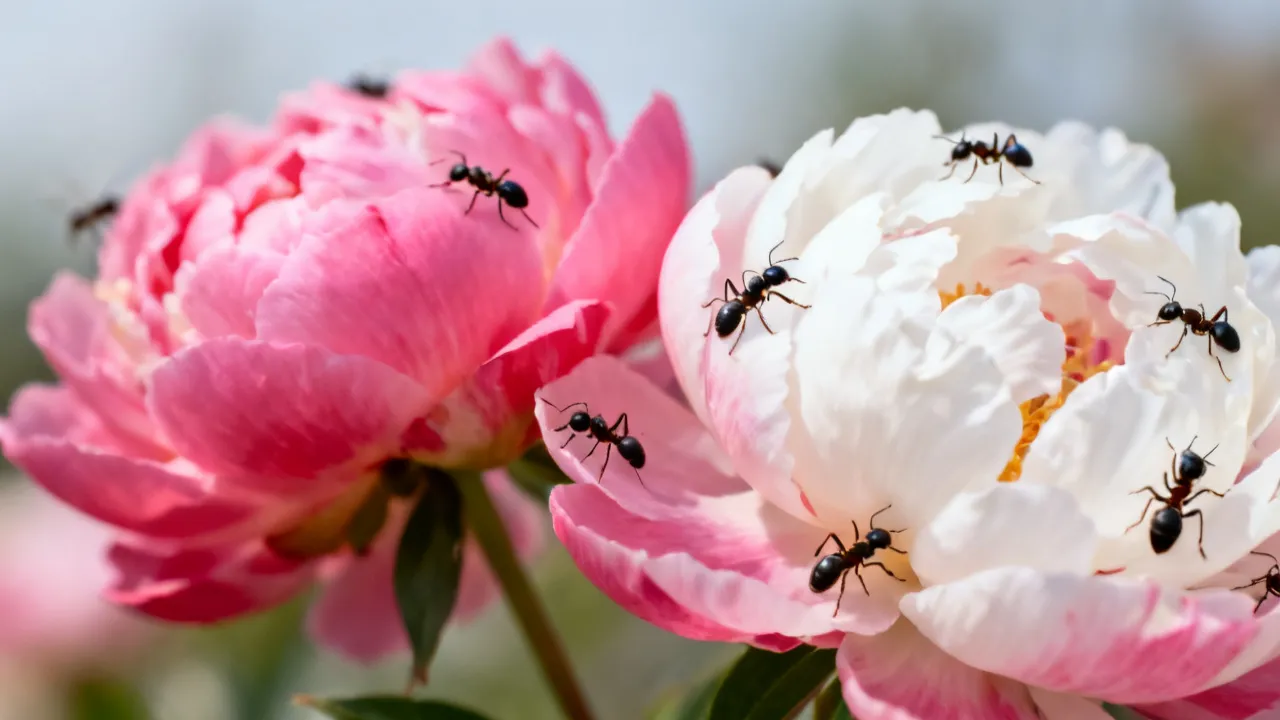
For years, many have believed that ants damage peony plants by eating their buds and flowers. This misunderstanding stems from the visible affinity ants have for these budding flowers. However, the truth is quite the opposite. Ants are not harmful to peonies; instead, they are drawn to the sweet nectar produced by the peony buds. This nectar acts as a source of energy for the ants, elevating their foraging behavior and presence around these particular plants. It is essential to recognize this relationship as one based on attraction rather than harm.
Symbiosis: Peonies and Ants
The relationship between peonies and ants is symbiotic. This means both organisms derive benefits from their interaction. Peony buds exude a sugary nectar from their buds. This nectar attracts ants, which in turn aid the plant by providing a form of natural pest control. As ants forage over the peony buds for nectar, they help keep harmful insects at bay. This symbiotic relationship ensures that peony plants can flourish without the threat of destructive pests. Furthermore, the presence of ants around peonies can deter not just small insects, but also larger herbivores that might otherwise target the tender buds and flowers, enhancing the survival chances of these beautiful plants.
Scientific Insights into Peony-Ant Interaction
Scientifically, this phenomenon underscores the intricate ecological connections that exist in nature. Studies have shown that the nectar produced by peony buds is specially designed to attract ants before the bloom fully opens. By doing so, the peony ensures that the ants are present to deter other herbivorous insects. Moreover, this nectar has no role in the blooming process itself, making it purely an attractant for ants. The additional energy that the ants gain from the nectar empowers them to defend the peony more effectively. Observations have indicated that ants can decrease the amount of herbivore damage significantly, promoting healthier blooms at flowering time. These elements create an equilibrium where peonies thrive and provide resources for ants, showcasing mutual benefits in their coexistence.
Ecological Significance
The presence of ants on peony plants highlights the role of mutualism in ecosystems. Mutualistic relationships are critical to biodiversity, promoting balanced interactions that support the survival of different species. Peonies provide resources, while ants contribute to plant defense, creating a balanced ecosystem dynamic. Additionally, this interaction exemplifies a fundamental ecological principle where multiple species depend on each other for survival. The complexity of these interactions demonstrates that even small insects like ants can have substantial impacts on the survival and growth of plant species like peonies.
The Lifecycle of Peonies and Their Ant Associates
To understand the relationship between peonies and ants fully, it is also vital to explore the lifecycle of peonies. Peonies, which can live for decades, go through a variety of stages, from the early spring buds to their summer blooms. During the bud stage, peonies develop tightly rolled flower buds rich in nectar. This stage is critical for attracting ants, and it's here that the mutualistic relationship truly begins to develop. As the ants visit these budding flowers for nectar, they inadvertently protect them from other predators. This phase aligns perfectly, giving both organisms a chance to flourish together.
The Role of Ants in Pest Control
Ants are often natural pest controllers. Their foraging behavior ensures that they monitor for other insects that may pose a threat to peony buds and blossoms. When ants detect pests, they can act in two ways: they can chase away smaller insects, and in some cases, attack them. Additionally, ants may engage in behaviors that protect their peony plants from being infested by pests like aphids and spider mites. Notably, aphids produce a sugary substance known as honeydew, which many ants find attractive. In such cases, ants may transport aphids to ensure consistent access to this reward, granting them incentives to protect the plants host to these pests. Therefore, while ants are known for their focus on nectar and honeydew, their numerous actions help maintain the overall health of peonies and other flowering species.
Ant Behavior In Relation to Peonies
Understanding ant behavior gives deeper insights into their relationship with peonies. Ants are social insects that operate within meticulously structured colonies, which not only encourages foraging for food but also prompts defensive behaviors when members of their colony feel threatened. Their presence on peonies can appear chaotic, yet there is a method to what may seem like madness. Worker ants venture out for food while also scouting areas where pests may flourish. The flexibility of their behavior allows them to adapt quickly to changes around peonies, ensuring they can switch focus if pests invade or if their food source diminishes.
FAQs About Peony and Ant Relationships
- Do ants hurt peony flowers?
No, ants do not harm peony flowers. They are attracted to the nectar and help protect the plant from other pests. - Should I remove ants from my peonies?
No intervention is needed as ants do not damage the plant; they are beneficial to it. - Can peonies bloom without ants?
Yes, peonies can bloom without ants. The presence of ants is not necessary for blooming but offers the benefit of pest protection. - Is there any need to treat peonies with insecticide?
Using insecticides isn't necessary when ants are present unless there's an infestation of truly harmful pests. - What other insects tend to visit peony buds besides ants?
Aside from ants, you might encounter bees, which are also beneficial as they aid in pollination. Some butterflies and moths are also drawn to peonies, primarily for their nectar, contributing positively to the ecosystem. - How can I promote a healthy environment for both peonies and ants in my garden?
To foster a healthy coexistence, avoid using pesticides that could harm ants, ensure peonies are planted in well-draining soil, and provide diverse plantings to attract beneficial insects.
Conclusion
The fascinating relationship between peonies and ants showcases nature's remarkable symbiosis. As allies rather than adversaries, ants play an essential role in safeguarding peony plants from pests. This dynamic interaction emphasizes the importance of biodiversity within ecosystems where different organisms can thrive together. Gardeners should embrace this natural partnership, recognizing that these tiny insects offer more than meets the eye in maintaining the health and vibrancy of peonies. Encouraging this relationship can help create a flourishing garden, ensuring that both peonies and their ant companions thrive harmoniously in their shared environment.
Broader Implications of Mutualism in Horticulture
While the peony-ant relationship is a specific example of mutualism, it prompts broader discussions on the implications of such relationships in horticulture and agriculture. In a world increasingly challenged by the need for environmentally sustainable practices, understanding and leveraging these natural interactions can provide alternative pest management strategies. Farmers and gardeners alike can benefit from integrating mutualistic relationships into their cultivation practices. By fostering environments that encourage beneficial insects like ants, they can reduce reliance on synthetic pesticides, leading to healthier ecosystems that promote biodiversity.
Creating Biodiversity in Gardens
One of the key approaches to nurturing mutualistic relationships like that of peonies and ants is to focus on biodiversity in gardening practices. Rather than monoculture approaches that can lead to pests becoming established, diverse plantings make it harder for pests to find their favorite host plants. When a garden is hosts a variety of flowers, shrubs, and trees, a range of beneficial insects can thrive. This variation brings balance to the ecosystem as natural predators keep pest populations in check. Consider integrating flowering plants that bloom at different times throughout the growing season to support these beneficial insect communities year-round.
The Educational Value of Peonies and Ants
The peony and ant partnership can also serve as an educational opportunity for gardeners, students, and nature enthusiasts. By observing this relationship, one can learn about complex ecological interactions, the importance of pest management, and the roles different organisms play in an ecosystem. Creating workshops or educational segments in schools or community gardens focusing on pollinators and mutualistic relationships enriches knowledge and promotes ecological responsibility. This awareness can foster a generation of environmentally-conscious individuals interested in sustainable practices for maintaining healthy gardens and managing ecosystems.
Incorporating Ants into Garden Design
For those interested in garden design, recognizing the role of ants can also inform decisions regarding the choice of plants. Selecting peonies and similar flowering plants that attract mutualistic ants encourages their presence, which in turn can lead to healthier plants. When planning a garden, consider how the layout and arrangement can promote the movement of ants and other beneficial insects. Raised beds and varied plantings can provide opportunities for ants to navigate through the garden efficiently and protect various plant species effectively. Additionally, the use of organic mulches not only improves nutrient retention in the soil but can also create habitats for ants, supporting their populations and their beneficial roles.
Future Research Directions
As with any area of ecological research, there exist possibilities for further investigation into the dynamics between peonies and ants. Research could explore how different ant species contribute to plant health or how environmental factors, such as climate change, might influence these relationships. Additionally, studies assessing the nutritional composition of peony nectar could yield insights into the specific attractants for different ant species, enhancing our understanding of mutualistic interactions. This finding could further apply to agricultural practices, where using native plants to attract beneficial ants can naturally control pests in crops.
Final Thoughts
The relationship between peonies and ants is just one example of the intricate connections that bind the plant and animal worlds in complex mutualistic relationships. Understanding this interaction not only enriches the gardening experience but serves to advocate for ecologically sound practices that respect and utilize these natural systems. By fostering health relationships in our gardens, we contribute to a more robust biodiversity that is crucial for the environment, creating spaces where both plants and insects can thrive symbiotically.
-
1

Maximizing Benefits of Solar Panels: Costs and Energy Efficiency
-
2
Maximizing Your Purchase: Ram 1500 Deals and Towing Capacity
-
3
Affordable Stair Lifts for Seniors: A Comprehensive Guide
-
4
The Ultimate Guide to Lab-Grown Diamonds: Ethical & Cost-Effective Choices
-
5
The Ultimate Guide to Weight Loss Injections, Metabolism, and Appetite Suppression